Contact Info
- 131 Continental Dr Ste 305, Newark, DE 19702, USA
- +17033373776
- [email protected]


How to Start a Car Rental Business in the US
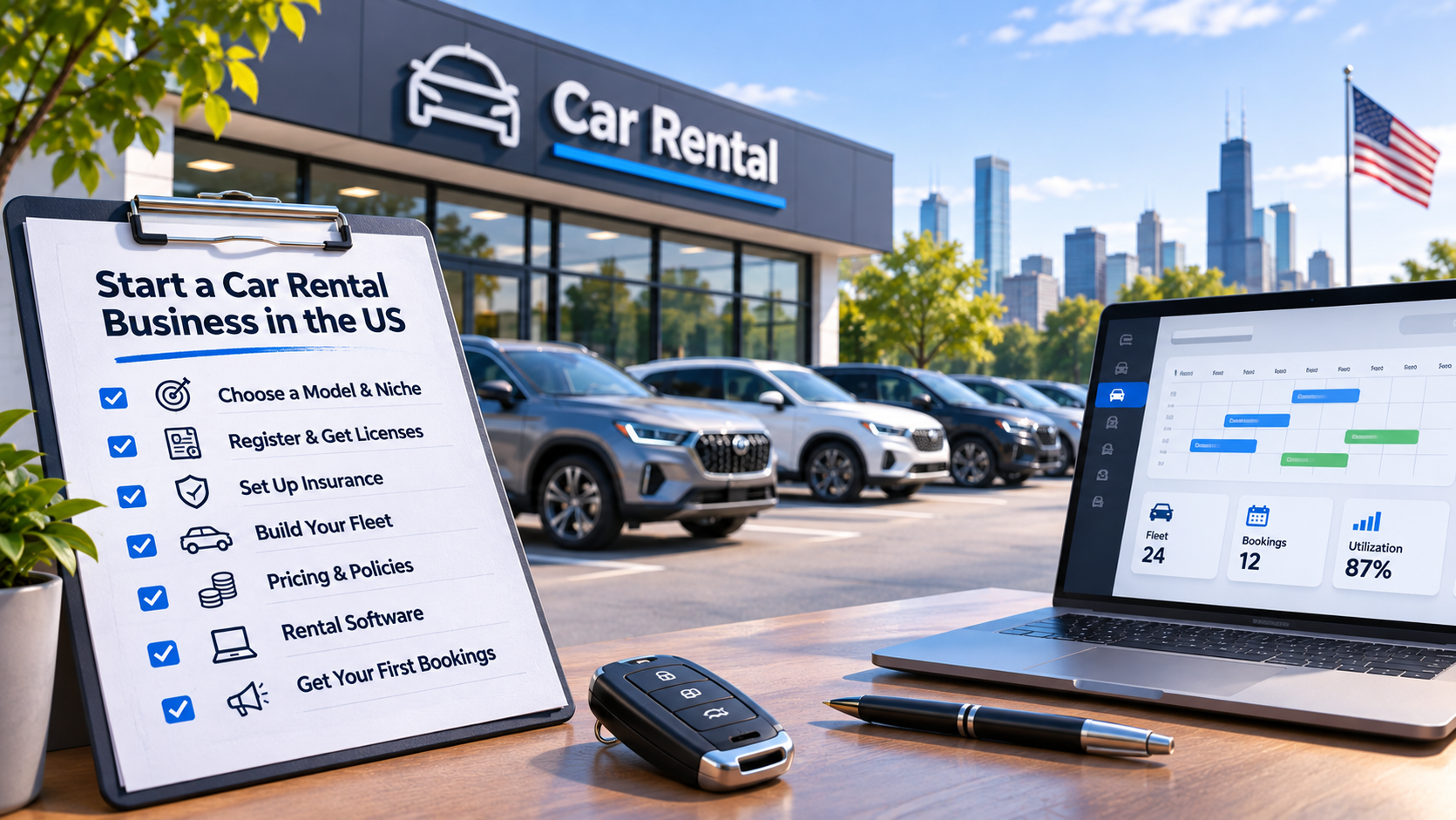
Starting a car rental business in the US can be a durable, cash-generating operation — but the margins live in the details: insurance, utilization, and the systems you use to keep the fleet moving. This guide walks through the practical steps, in the order most operators actually face them.
1. Decide on your model and niche
"Car rental" covers very different businesses. Pick a lane before you buy a single vehicle:
- Daily/leisure rentals — airport and tourist demand, high turnover, price-sensitive.
- Local/neighborhood rentals — insurance-replacement, contractors, longer rentals.
- Specialty — luxury/exotic, vans and trucks, EVs, or rideshare-driver rentals.
Your niche drives everything downstream: the vehicles you buy, the insurance you need, and the customers you market to.
2. Register the business and get the right licenses
Form a legal entity (most rental operators use an LLC for liability separation), get an EIN, and open a business bank account. Licensing is state- and city-specific — many states require a specific vehicle-rental or "U-drive" registration, sales/rental tax collection, and local business permits. Airport counters add concession agreements. Confirm the exact requirements with your Secretary of State and local authorities before you operate; don't rely on a generic checklist.
3. Sort out insurance early
Insurance is the single biggest line item new operators underestimate. You will typically need commercial auto liability, physical damage coverage for the fleet, and a plan for what you offer renters at the counter (a damage waiver and/or supplemental liability). Talk to a broker who specializes in rental fleets — standard commercial policies often exclude rental use.
4. Build your starting fleet
Resist the urge to over-buy. A smaller, well-utilized fleet beats a large idle one. When choosing vehicles, weigh:
- Acquisition cost vs. resale value — depreciation is your largest hidden expense.
- Maintenance and parts availability — standardize on a few models to simplify service.
- Demand fit — match the vehicle mix to the niche you chose in step 1.
Buy, finance, or lease based on cash flow — many operators mix all three.
5. Set pricing, deposits, and policies
Decide daily/weekly rates, mileage policy, security deposits/holds, fuel policy, age requirements, and your late-return and cancellation rules. Write these into a clear rental agreement. Deposits and pre-authorization holds are your main protection against damage and non-return — build them into the booking flow from day one.
6. Choose the software that runs the operation
Spreadsheets break the moment you have more than a handful of vehicles and overlapping bookings. A dedicated rental platform keeps availability, reservations, agreements, payments, maintenance, and reporting in one place — and prevents the double-bookings and missed charges that quietly erode margin. This is where tooling decisions matter most; see our guide on what to actually check before signing up for rental management software.
Nomad RMS was built for exactly this: reservations that stay in sync with live availability, branded online booking, digital agreements, payments and deposits, maintenance scheduling, and reporting — in one system.
7. Get your first bookings
Launch a branded booking website so customers can reserve without calling. Claim and optimize your Google Business Profile (the biggest local-search lever), list on relevant marketplaces if they fit your model, and build reviews from day one. Local SEO — "car rental [your city]" — compounds over time.
What it really takes to succeed
The operators who last don't just rent cars — they manage utilization (how many days each vehicle earns), recovery (damage, tolls, fuel, late fees), and retention (repeat and referral customers). Get the systems right early and those three levers do the compounding for you.
Ready to run it on one platform? Talk to the Nomad RMS team about setting up your fleet.